Flexible Flue Liners
Regulations
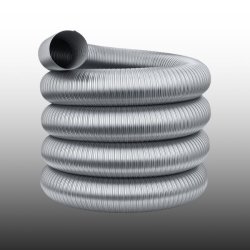
Document J of the Building Regulations requires that a flexible flue liner can only be installed completely enclosed inside a masonry chimney. A non masonry enclosure such as timber or plasterboard boxing in is not acceptable. The type of flue liner permitted depends on the type of appliance and the fuel chosen to be used. Gas and Oil flexible flue liners are manufactured out of single strip 316 grade stainless steel.
There are two grades of multi fuel liner available:- 316 grade stainless steel, which is suitable for wood burning and multi fuel use.
- 904 grade stainless steel, which is suitable for multi fuel and specifically coal based solid fuels.
Prior to installation
The chimney should be inspected along with the external brickwork and capping/flaunching for deterioration and if necessary any remedial work should be carried out. The chimney should be swept, preferably by a suitably qualified chimney sweep who will provide a certificate after sweeping and checking, which should be retained for future reference.
Installation of the liner
The flue liner can be pulled up or down the chimney using purpose made nose cones, which are available on request. For multi fuel liners, heavy duty and light aluminium nose cones can be supplied. lt is recommended that a coring ball or short test section is pulled through the chimney prior to installation in order to ensure the chimney is suitably sized, and free from any obstructions. We would always recommend that flexible liners are insulated to aid the performance of the appliance and chimney system. Insulation such as Micafil, K-Wrap or Chimwrap can be used. Please note that Micafil must not be used with gas liners.
Fuels and appliance operation
Only fuels which are HETAS approved or recommended by the appliance manufacturer can be used. If burning wood, then it must be well seasoned for at least 12 months and not be any more than 20% moisture content to avoid creosote deposits building up within the flue way which can cause chimney fires.
If the appliance is slumbered overnight or for longer periods then it is advisable to run the appliance at controlled high fire condition for a period of at least 30 minutes. Prolonged slumbering of the appliance is a contributing factor to a liner failure especially when burning coal based solid fuels. It is important to maintain sufficiently high flue gas temperatures in order to avoid condensate and acid corrosion problems.
Household refuse must not be burnt.
Maintenance
Provision should be made for inspecting and cleaning the liner especially on multi fuel liners for solid fuel applications. The liner should be swept at least once a year by a suitably qualified chimney sweep. Chemical chimney cleaners which contain chlorine, fluorine or metal scarifying devices cannot be used under any circumstances and will invalidate your warranty. Mechanical cleaning with a stiff nylon brush and rods are the only recommended methods.
Life expectancy
Under normal operating conditions and providing the liner is installed correctly by a competent person, flexible liners should last the lifetime of the appliance.
Warranties
Gas, Oil and 316 grade multifuel flexible liners carry a 10 year conditional warranty. 904 grade multi fuel flexible liners carry a 25 year conditional warranty. Contact us for further information. The conditions are that the flue liner is correctly sized, installed, and properly maintained, burning only approved fuels in accordance with the appliance manufacturer’s instructions.